The Oshima Noh Theatre of Hiroshima Prefecture, Japan, and Theatre Nohgaku, based in Tokyo and New York, will collaborate for the first time in a joint production of classical and contemporary noh theatre in London, Dublin, Oxford and Paris from 2 to 10 December 2009.
The London-Oxford performances are a part of the Japan-UK 150 Festival celebrations. The tour also includes ¡ÈGetting to Noh,¡É a programme of public workshops, lectures, and educational activities to introduce the history, dance, music, costumes and masks of noh.
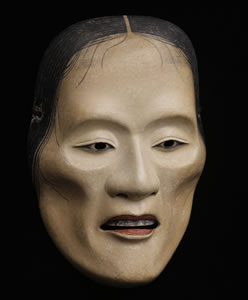
Dating back seven centuries, ¡Ænoh¡Ç is a classical Japanese performance form combining elements of dance, drama, poetry and music, featuring elaborate costumes and masks.
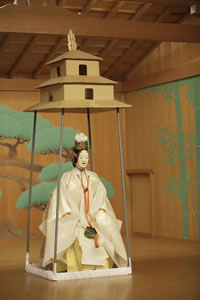
The joint production will perform an extract from the classical noh play KIYOTSUNE along with the world premiere of a new, contemporary English-language noh play, PAGODA, by Jannette Cheong with music and direction by Richard Emmert, founder of Theatre Nohgaku.
PAGODA is a multicultural theatre project that brings together the centuries' old noh tradition and a contemporary British - Chinese story to investigate the themes of identity and migration. This will be the first time for a strictly English-language noh play written by a British playwright to be produced and performed as a fully realised noh performance.
The Oshima Family, through the Oshima Noh Theatre in Fukuyama, Hiroshima prefecture, has long carried out numerous activities to introduce noh to a general Japanese public. Theatre Nohgaku, since its founding in 2000, has introduced English noh to international audiences.
|