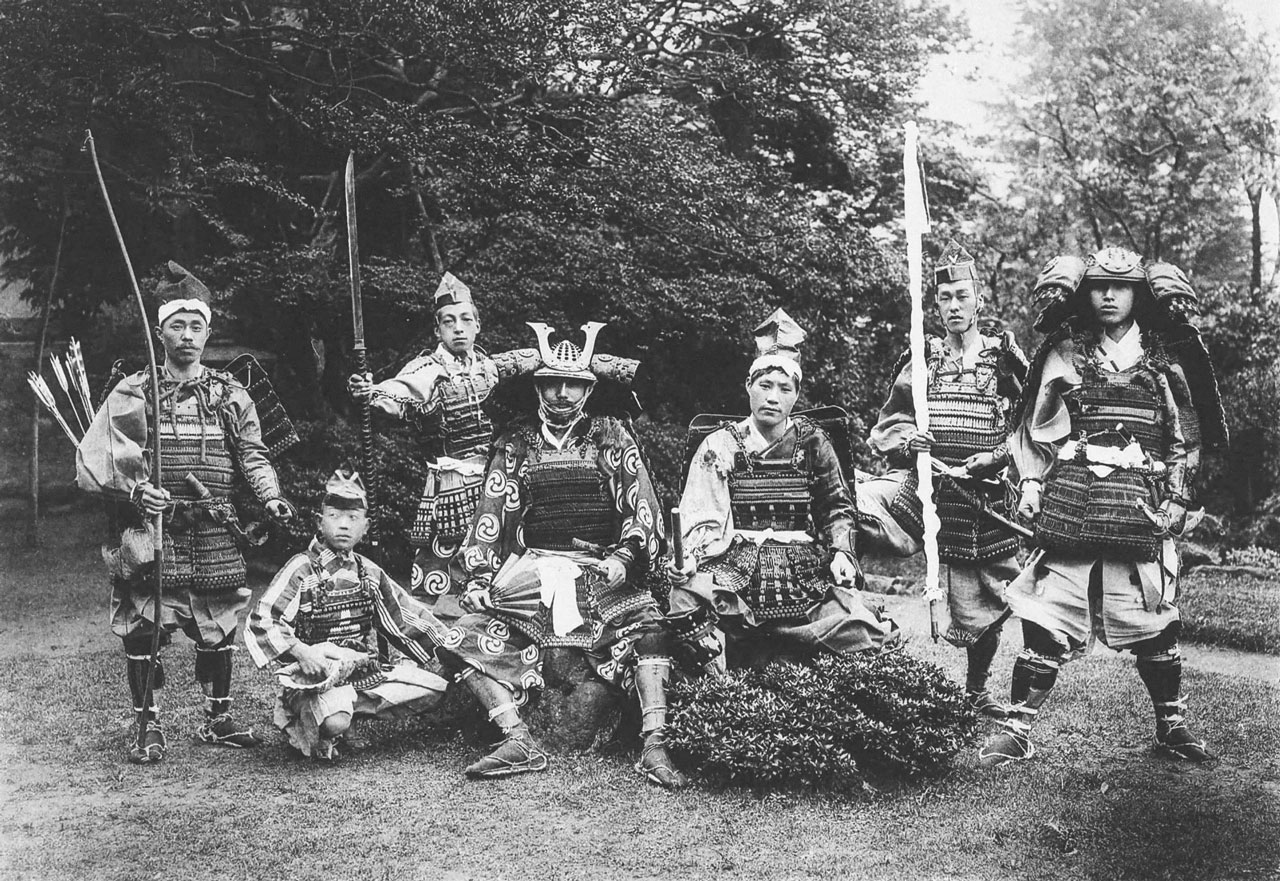
1910 photo of men in samurai armour. National Diet Library, Tokyo.
Samurai, Knights, and Nationalisms: The Middle Ages in Modern Japan
- 15 January 2026
- 6:00pm - 7:00pm GMT
- In person lecture (venue TBC) and online via Zoom
- https://www.sainsbury-institute.org/events/samurai-knights-and-nationalisms-the-middle-ages-in-modern-japan/
- +44 01603 597507
- sisjac@sainsbury-institute.org
- Tweet
THIRD THURSDAY LECTURE - SAINSBURY INSTITUTE
Professor Oleg Benesch (University of York)
About the Talk
In the nineteenth century, Europeans rediscovered and reinterpreted the Middle Ages on a grand scale. Medievalist symbols and ideals were widely invoked as a response to industrialization and the Enlightenment, feeding into art, architecture, literature, and culture, from the knightly tales of Sir Walter Scott to the proliferation of Gothic architecture. Colonial officials, soldiers, and settlers saw themselves as modern heirs of medieval knighthood, spreading Christianity and “civilization” as part of their perceived imperial mission. Medieval symbols and narratives were eagerly taken up in European settler societies, including the United States, Australia, and Latin America.
The revival of the idealized medieval past could not be overlooked by those societies that were confronted by the increasingly global reach of the Western empires. As part of this engagement, societies around the world looked to discover and mine their own medieval pasts for national symbols and narratives. This talk examines how Japan looked to its own Middle Ages in the decades from the 1840s to the 1960s, a period when the country was first threatened by Western imperialism before building and losing its own empire. Samurai warriors and other symbols of medieval Japan were reinvented for modern purposes, and came to define the nation at home and abroad. The samurai, especially, have become a truly global icon, as seen in the 2026 special exhibition “Samurai” at the British Museum.
About the Speaker
Oleg Benesch is Professor of History and Head of the Department of History at the University of York. Together with Rosina Buckland, he co-authored the forthcoming book Samurai, accompanying the major British Museum exhibition in 2026. Oleg is also the author of Inventing the Way of the Samurai: Nationalism, Internationalism, and Bushido in Modern Japan (Oxford 2014), co-author of Civilizing Emotions: Concepts in Nineteenth Century Asia and Europe (Oxford 2015), co-author of Japan’s Castles: Citadels of Modernity in War and Peace (Cambridge 2019), and co-editor of Drugs and the Politics of Consumption in Japan (Brill 2023). For more on his research and publications, please see www.olegbenesch.com
To attend in person, please email sisjac@sainsbury-institute.org or call +44 (0) 1603 597507 to book your place.
Doors open at 17:45. Please note that in-person spaces are limited and will be allocated on a first come, first served basis. A reception will be held after the talk.