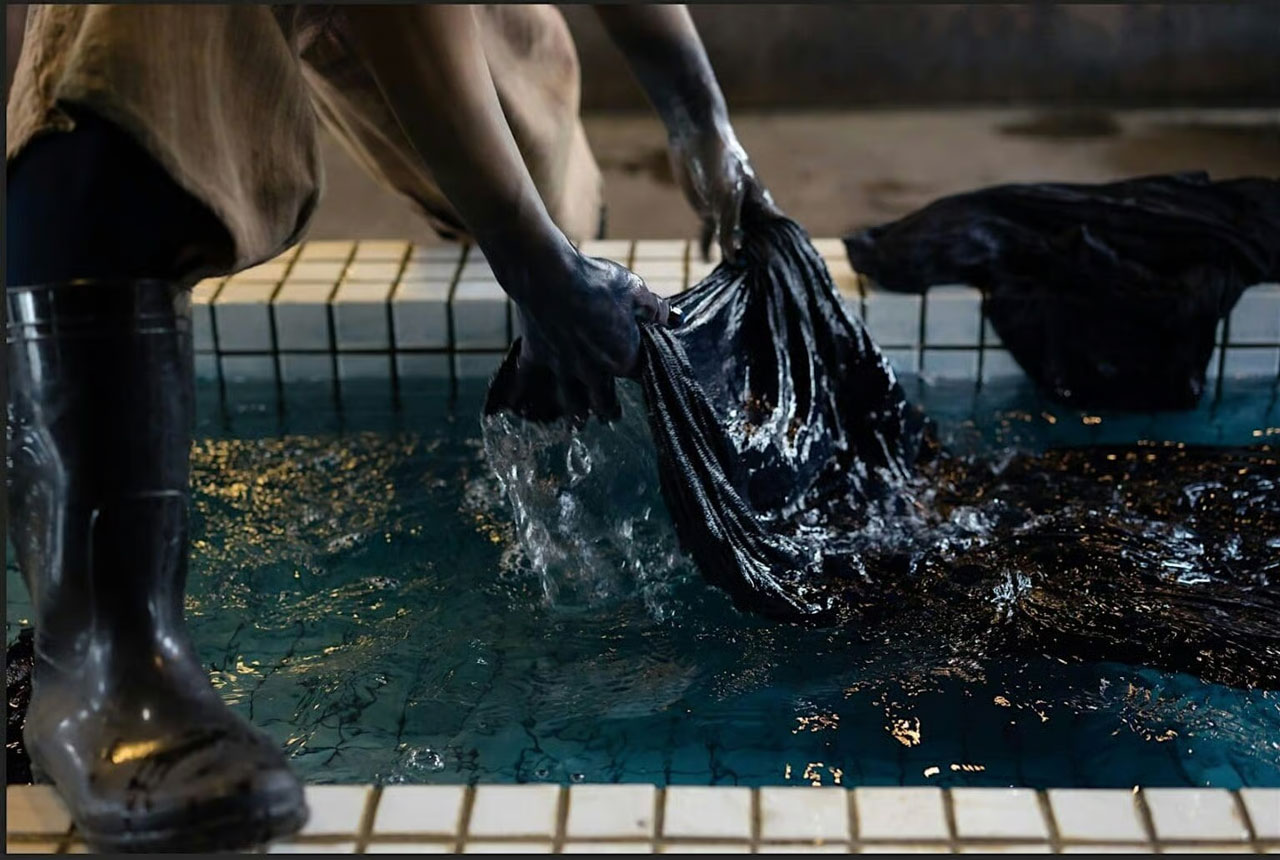
Aizome: Indigo Dyeing Traditions in Ōme
- 17 January 2026
- 13:00 - 14:15
- The Hall, Japan House London, 101-111 Kensington High Street, London, W8 5SA
- https://www.japanhouselondon.uk/whats-on/aizome-indigo-dyeing-traditions-in-ome/
- +44 (0)20 7932 7100
- info@japanhouselondon.uk
- Tweet
Discover indigo dyeing (aizome) with a talk by Murata Noriyuki, followed by a virtual demonstration and tour of a Kosoen dyeing studio in Ōme City, Tokyo.
Tokyo is often seen as a vast metropolis of bustling commercial and entertainment districts, but this image tells only part of the story. Nestled in the Okutama Mountains of western Tokyo, Ōme City reveals a different side of the capital: fast-flowing turquoise Tama River, lush forests and a slower pace of life.
During the Edo period (1603–1868), Ōme flourished as a centre of textile production and indigo dyeing. The celebrated product of the local looms, ōmejima, a fabric woven with interlacing silk and cotton threads naturally dyed in blue, has been designated a Tangible Folk Cultural Property of Ōme City. Today, Ōme is best known for popular hiking trails leading to Mt Mitake, but it also houses an indigo dyeing studio run by the Murata family since the Taishō period (1912 –1926).
Currently run by dyer Murata Noriyuki under the name Kosoen, the studio relies entirely on natural methods. Indigo dye is produced through the lye fermentation of sukumo, dried and fermented leaves of Persicariatinctoria (Japanese indigo plant), in specially built vats enriched with natural wood ash to create a highly alkaline environment. While many workshops have moved towards the use of synthetic substances to produce indigo dye, Murata Noriyuki remains committed to preserving the old, natural techniques. He sees the indigo dye as a living organism – its vitality influences the depth and richness of the colour it yields. Brought to life by the tireless work of microorganisms, if nurtured with care, it can keep producing deep indigo blue for years or even decades.
This event starts with a brief presentation about Tokyo by a representative from the Tokyo Convention & Visitors Bureau. The conversation with the head of the studio, Murata Noriyuki, is then followed by a special virtual tour and indigo dyeing demonstration conducted live at the studio in Ōme City. There will be an opportunity to ask questions.
The event series is presented as part of the Spotlight on Local Japan Programme, organized in collaboration with JNTO, which accepts applications from potential collaborators based in Japan to co-create cultural events presenting Japan’s regional diversity at Japan House London.
Please note that filming and / or photography may take place at this event. Photos and footage of the event may then be used to promote Japan House London, helping more people to discover what we offer. If you have any concerns, please contact us online or contact a member of the team on site.
About the collaborators
Murata Noriyuki
Murata Noriyuki was born in Ōme city in 1960. After succeeding his family business in 1985, he initiated his efforts to revive the natural indigo dyeing techniques in his hometown. In 1986 he started training in Tokushima, learning both dyeing techniques and sukumo production methods (under indigo farmer and sukumo maker Nii Osamu). Upon his return to Ōme, he established Kosoen. While preserving natural techniques, he continually pursues new forms of expression and new applications of indigo, presenting its beauty through exhibitions and collaborations around the world. He has received numerous awards, including the Tokyo Traditional Crafts Challenge Awards and The Wonder 500, and is dedicated to sharing the appeal of natural, environmentally conscious indigo dyeing and to preserving it for future generations.
Kosoen
An indigo dyeing studio established in 1989 by Murata Senko Co., Ltd., a dyeing house active in Ōme City, since the Taishō period (1912-1926). While preserving the traditional natural indigo dyeing method, Kosoen promotes the beauty of indigo across fashion, interior design, and looking for new applications. Their work is highly regarded both in Japan and abroad, and the studio actively participates in Tokyo tourism initiatives.
Booking Essential | Admission Free